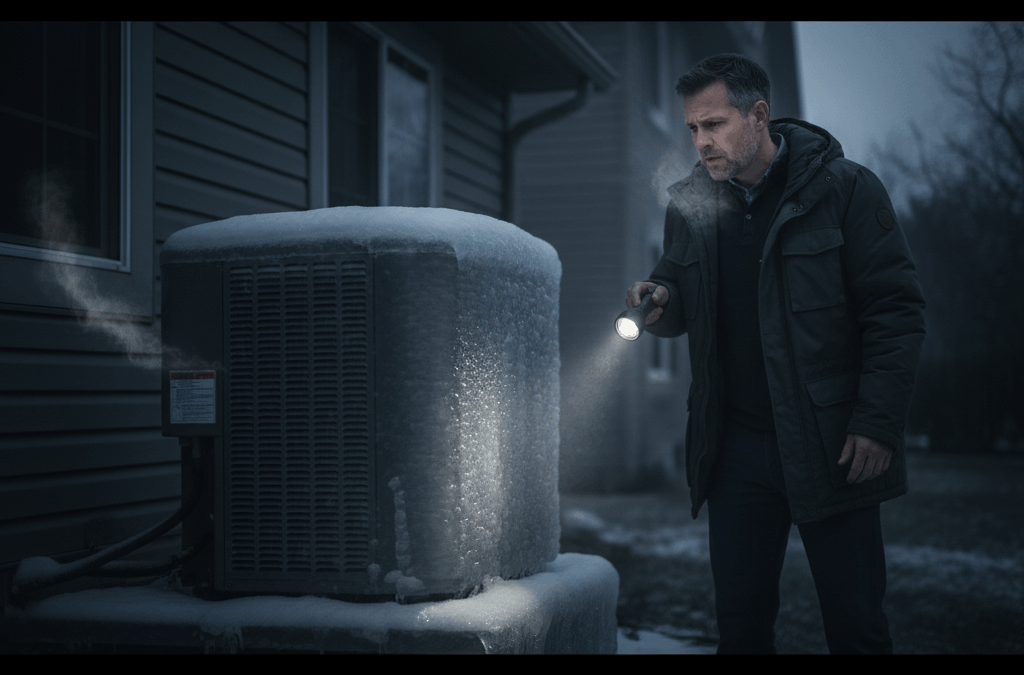
When homeowners ask, “Why is my heat pump not heating?”, one of the most common complaints is that the heat pump is blowing hot air that still feels insufficient, or worse, that it’s blowing cold air when it’s supposed to heat. Even when a heat pump appears to be working, it may not be delivering the expected warmth. Understanding the root causes of these issues can help determine whether the system needs repair, maintenance, or replacement.
In this article, Jade Air Company explores the main reasons a heat pump may fail to heat properly, explains how to troubleshoot them, and outlines the scenarios where a professional HVAC specialist should step in.
What causes a heat pump to blow cold air in winter instead of heating?
One of the first signs something is wrong is heat pump blowing cold air in winter. A properly functioning heat pump should extract heat from outdoor air and transfer it inside, even in colder conditions. If it’s not doing that, several issues may be at fault.
Thermostat settings and fan mode
Often, the problem is simpler than it seems. If the thermostat is set incorrectly—perhaps still on “cool” mode or “fan-on” instead of “auto”—the system might circulate indoor air without actually conditioning it. In this state, the air feels cold because the heat pump isn’t actively heating. Also, setting the fan to “ON” means airflow continues even when heating isn’t engaged, leading to cold air blowing at the vents during idle cycles. For more tips and troubleshooting steps, check out our Ultimate Guide to Heating Repair Services in Dallas.
Defrost cycle operation
Heat pumps have a built-in defrost mode that prevents ice from accumulating on the outdoor unit. During this cycle, the system temporarily reverses its operation, and the indoor air may feel cool or even cold. This is normal behavior, but if the defrost cycle is running too often or too long, it can significantly reduce heating performance.
Refrigerant leaks or low charge
Refrigerant plays a crucial role in heat transfer. A leak or low refrigerant charge reduces the heat pump’s ability to absorb and move heat. Without enough refrigerant, even when the system is running, it may not heat properly, and you might feel cold air at the vents.
Reversing valve malfunction
The reversing valve enables the heat pump to switch between heating and cooling modes. If it’s stuck, damaged, or electrically failing, the unit may remain in cooling mode even when set to heat, causing cold air to blow despite the winter setting.
Dirty or obstructed coils and filters
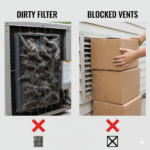
Filters, indoor evaporator coils, and outdoor condenser coils must be clean and unobstructed for efficient heat exchange. Dirt, debris, or ice buildup restricts airflow, reduces heat transfer, and can cause the air to feel cold. Clearing obstructions and maintaining airflow is critical for proper heating.
Outdoor temperature and efficiency limitations
While many modern heat pumps work at temperatures well below freezing, their efficiency drops as ambient temperature falls. In extreme cold, heat pump heating capacity naturally declines. At some point, auxiliary or backup heating becomes necessary
Why is my new heat pump not blowing hot air?
It’s especially frustrating when a new heat pump fails to blow hot air. Even a recently installed system can have issues. Here are key factors to check.
Incorrect installation or sizing
If the system wasn’t properly sized or installed, it may fail to deliver sufficient heat. Undersized units struggle to maintain temperature, while poor duct layout or refrigerant piping can lead to inefficiencies. Even new equipment suffers if installation was flawed.
Thermostat wiring issues
During installation, thermostat wiring must be correctly configured. If the control signals for heating, cooling, and auxiliary heat are mixed up, the heat pump may not activate heating mode properly.
Blocked or unbalanced air distribution
New systems with improper duct balance or blocked vents can distribute warm air poorly. Even if the heat pump itself is producing heat, some rooms or registers may remain cold due to airflow issues.
Defective defrost control or sensors
If the defrost control board or sensors are incorrect or defective from the start, the heat pump might remain stuck in defrost mode, meaning heat doesn’t get delivered properly.
How can a heat pump cool but not heat your home properly?
It’s not unusual for a heat pump to cool effectively in summer yet struggle in winter. This disparity often points to heating-specific component issues.
Component damage or appliance wear
Parts like the compressor, reversing valve, or defrost control degrade with time. If these are damaged or worn, heating mode may malfunction even if cooling still works.
Malfunctioning auxiliary heat
Many heat pumps use auxiliary heat (electric resistance coils or a gas furnace) to supplement heating in very cold temperatures. If this backup fails, the system may be unable to maintain indoor warmth during cold snaps. Unusual sounds could be an early warning sign—refer to our 7 Furnace Noises You Should Never Ignore guide to recognize potential issues before they turn into major repairs.
Duct leakage or insulation issues
Cold air infiltration or duct leaks can hinder heating effectiveness. Heat produced by the pump may escape before reaching living spaces. Proper insulation and duct integrity are crucial for heating performance.
Common Problems vs. Symptoms and Solutions
| Problem | Symptom | Suggested Solution |
| Thermostat in “cool” or fan-only mode | Air blowing but home remains cold | Verify thermostat settings and correct mode |
| Refrigerant leak / low charge | Weak heating, frost on outdoor coil | Contact HVAC technician to repair leak and recharge |
| Reversing valve stuck | Continuous cold air during heating cycle | Replace or repair reversing valve |
| Clogged filter or coils | Reduced warm airflow, frozen coils | Clean/replace filter and clear debris from coils |
| Defrost cycle too frequent | Cold air during prolonged defrost mode | Inspect defrost control board and sensor |
| Auxiliary heat failure | No backup heat in very cold weather | Repair auxiliary heating system or furnace |
How does defrost mode affect heating performance?
Defrost mode is essential for ice removal but often a source of confusion for homeowners who think their heat pump isn’t working properly.
When frost builds up on the outdoor coil, the heat pump reverses its cycle to “melt” the ice. During that time, the system may blow cool air inside while redirecting heat to the outdoor side. If defrost is well-designed, it should be brief and infrequent. If it’s frequent or prolonged, that signals a defrost control issue or sensor misalignment.
If the system remains in defrost too long, the indoor environment may feel colder than expected, and heat pump blowing cold air becomes a noticeable issue.
What role does refrigerant level and leaks play in heating failure?
Refrigerant is the medium that transfers heat. If levels are too low due to a leak, performance drops drastically. Low refrigerant leads to poor heat absorption, frost buildup, and failing reversing valves. Without proper refrigerant, the system cannot heat efficiently, and the home remains cold.
Professional technicians must handle these repairs because refrigerant lines are sealed and regulated. Proper diagnostic, repair, and recharge are critical for restoring heating capability.
Why does a heat pump struggle in very cold temperatures?
Even high-quality heat pumps have operational limits in extreme cold. As outdoor temperature drops, there’s less ambient thermal energy to extract, which reduces system efficiency. Some heat pumps include weather-compensated controls or advanced cold-climate designs to mitigate this, but backup heat may still be needed.
Manufacturers often specify a lowest operational temperature for effective heating. Below that, electric resistance coils, gas furnaces, or auxiliary heat must supplement heating.
When should a homeowner repair vs replace a heat pump?
Deciding whether to repair or replace depends on age, efficiency, cost of repairs, and performance. If a heat pump is over 10–15 years old, frequently requires repairs, or struggles significantly in cold weather, replacement may be more economical.
For specific guidance, homeowners should refer to When to Repair vs Replace Your Heating System: A Homeowner’s f. Analyze repair costs, energy savings, and seasonal performance to make an informed decision.
When should you call a professional?
When the issue is not a simple thermostat setting or debris blockage, it’s time for a licensed HVAC technician. Here are strong indicators:
- The reversing valve is suspected faulty
- Refrigerant leaks or pressure abnormalities
- Electrical components, sensors, or control boards malfunction
- Repeated long defrost cycles
- Ductwork issues, auxiliary heat failure, or systemic inefficiency
Check heating repair pricing in your area and possible cost estimates through How Much Does Heating Repair Cost? to prepare for the expense.
Why Is My Heat Pump Not Heating?
Why is my heat pump cooling but not heating even though it’s switched to heat mode?
Often it’s due to a stuck reversing valve, incorrect thermostat wiring, low refrigerant, or failed defrost control.
Is it normal for the heat pump to blow cool air at the start of winter mornings?
Yes, briefly. The system may need to defrost or warm up, but it shouldn’t remain cool for long. Prolonged cold airflow may indicate an issue.
How often should a heat pump be serviced to prevent heating failures?
Ideally twice a year—once before heating season and once before cooling season—to check refrigerant, coils, filters, and electrical components.
Can a new heat pump still be under warranty if it’s not providing heat?
Yes, but warranty often doesn’t cover improper installation, thermostat setup, or auxiliary heat failures, so correct installation and diagnostics are essential.
What temperature range is too cold for a heat pump to operate efficiently?
It depends on the model, but many begin losing efficiency below freezing (32°F), and below −10 to −20°F, auxiliary heat is often required.
Conclusion
Understanding why a heat pump blows hot air that still doesn’t heat your home, or worse, why it blows cold air in winter, is critical for comfort, cost control, and system longevity. Common causes include thermostat misconfiguration, defrost cycle problems, reversing valve failures, refrigerant issues, dirty coils or filters, and cold-climate limitations.
New installations are not immune—sizing, wiring, balance, and sensor calibration still matter. When simple troubleshooting fails, professional inspection and maintenance are required. For homeowners needing estimates, guidance to repair vs. replace, or immediate service, Jade Air Company, a trusted HVAC repair company, is ready to assist. Our expert technicians can diagnose and resolve heating problems and help restore warmth and efficiency to your system.
Don’t suffer through another cold winter—contact us today for expert HVAC repair and support. As a trusted provider in the field, Jade Air Company ensures heating systems operate safely, effectively, and reliably.