
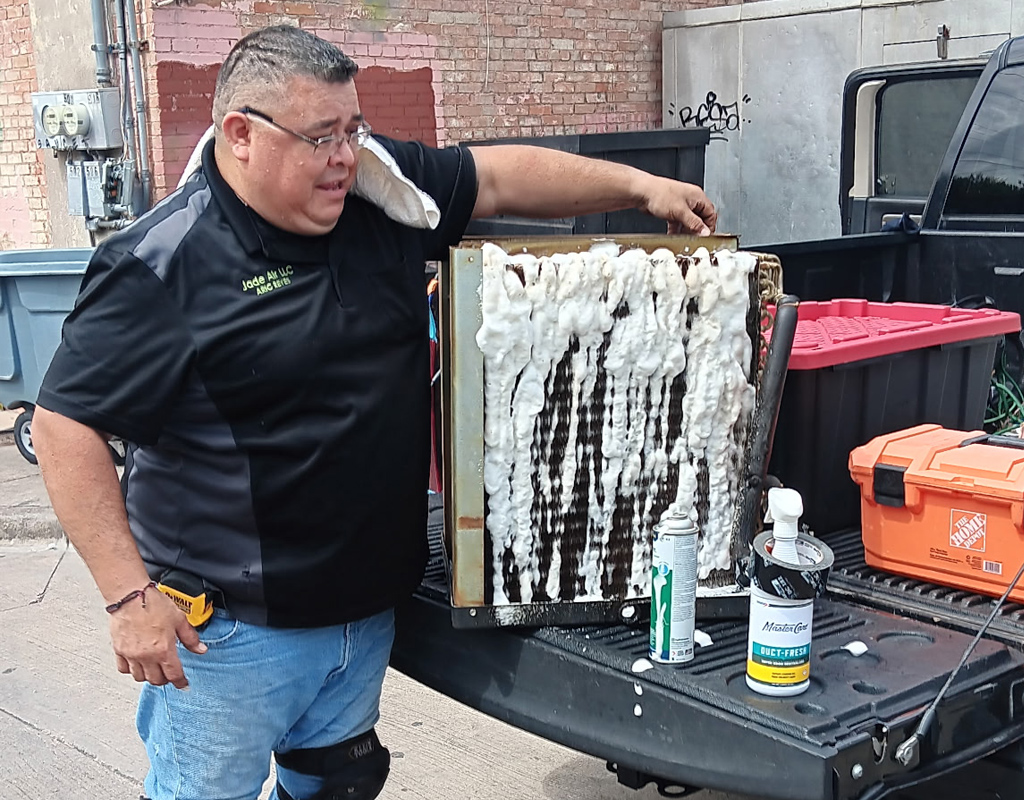
When most homeowners think about air conditioner maintenance, they think about changing the filter inside the house. That is certainly an important part of keeping an HVAC system operating properly, but there is another part of your air conditioner that is working just as hard to keep your home comfortable: the outdoor condenser unit.
Your outdoor AC unit is exposed to the weather every day. In Dallas, that means it has to deal with heat, wind, rain, cottonwood, leaves, grass clippings, dirt and plenty of other debris. If that material builds up on or around the condenser, it can restrict airflow and make your air conditioner work harder to move heat out of your home.
Keeping the area around your outdoor AC unit clean is one of the simplest things a homeowner can do to help maintain proper airflow and efficient operation. It is not a substitute for professional HVAC maintenance, but it is an easy way to give your air conditioner a little help and potentially avoid unnecessary strain on the system.
Why Airflow Is So Important to Your Outdoor AC Unit
Your air conditioner does not simply create cold air. It removes heat from inside your home and transfers that heat to the outside. The outdoor condenser is responsible for releasing that heat, and it needs adequate airflow across its condenser coil to do that job effectively.
When the coil becomes covered with dirt or debris, or when the space around the unit becomes obstructed, airflow can be reduced. Your air conditioner may then have to run longer to reach the temperature you have set on your thermostat. The longer and harder a system has to operate, the more energy it may consume, while additional operating stress can contribute to wear on components.
This is why something as seemingly insignificant as a layer of cottonwood or grass clippings can eventually become an HVAC problem. The debris does not have to completely block the condenser to affect its operation. A gradual reduction in airflow can be enough to make the system work harder than it should.
For Dallas homeowners who rely heavily on their air conditioner during the summer, maintaining good airflow around the outdoor unit is particularly important.
Cottonwood Can Quickly Cover an AC Condenser
If you have lived in North Texas for any length of time, you know how much cottonwood can end up floating through the air during certain times of the year. Those small, fluffy seeds seem to find their way onto everything, and your outdoor AC condenser is no exception.
Cottonwood can accumulate on the condenser coil and create a surprisingly dense layer over the surface. Because the condenser depends on air moving through those coils, an accumulation of cottonwood can interfere with the heat-transfer process.
If your home is near cottonwood trees, check your outdoor unit more frequently during the season when the trees are producing large amounts of seed. Removing loose material before it builds up can be much easier than waiting until the condenser is heavily coated.
Leaves and Other Yard Debris Can Restrict Airflow
Leaves are another common problem, particularly during the fall. Wind can push leaves against the condenser, while larger amounts can accumulate around the base of the unit. When leaves mix with dirt, moisture and other organic material, they can create a layer of debris that makes it more difficult for air to move freely.
Homeowners should also pay attention to vegetation around the condenser. Grass, weeds and other plants should not be allowed to grow directly against the unit. Your outdoor AC needs space around it so that it can draw and discharge air properly.
Keeping the area around the condenser clear does not require a complicated maintenance routine. Regularly removing leaves and other loose debris and keeping vegetation trimmed back can go a long way toward maintaining the airflow your system needs.
Grass Clippings Can End Up on Your Condenser
Your lawn mower can also contribute to a dirty outdoor AC unit. When grass is discharged toward the condenser, clippings can stick to the coil and accumulate over time. This is especially common when the unit sits close to the lawn.
Whenever possible, avoid directing mower discharge toward the outdoor AC unit. If grass clippings do end up on the condenser, remove loose debris carefully rather than allowing it to accumulate.
It is also a good idea to look at the unit after lawn service, particularly during the growing season. A few minutes of attention can prevent a much larger buildup later.
Dog Hair Can Become Part of the Problem
If you have a dog that spends time outdoors, especially one that sheds heavily, pet hair may also accumulate around your condenser. Dog hair can mix with grass, dirt, leaves and other debris, creating an additional source of restriction around the outdoor unit.
This is especially worth watching if your dog regularly spends time near the condenser. The AC unit may be a convenient shady spot for your pet, but all that hair being blown toward the condenser is not doing the equipment any favors.
Regularly checking the area around the unit and removing accumulated debris can help prevent pet hair from becoming part of a larger airflow problem.
Texas Storms Can Leave a Mess Behind
Dallas homeowners also have to contend with another source of outdoor AC debris: Texas weather. Strong winds and thunderstorms can blow leaves, branches, grass and other material into your yard and directly toward your condenser.
After a significant storm, it is worth taking a few minutes to inspect the outdoor unit. Look for branches, leaves or other debris that may be blocking the condenser. Also check for obvious signs of physical damage.
If a storm has damaged the unit, do not attempt to straighten bent components, repair electrical equipment or make other repairs yourself. Turn the system off if necessary and have a qualified HVAC professional inspect it.
A quick post-storm inspection can help identify problems before you discover them on the hottest day of the year.
How to Keep Your Outdoor AC Unit Clean
There are several simple things homeowners can do to keep the area around an outdoor condenser cleaner. Keep grass and weeds trimmed back, remove leaves and cottonwood regularly, and avoid piling yard debris against the unit. If you have pets, check the area periodically for accumulated hair and other debris.
Be careful when cleaning the condenser itself, however. The metal fins on the coil are relatively delicate and can bend easily. A pressure washer should not be used on an AC condenser because the high-pressure water can damage or bend the fins.
If the coil is heavily coated with dirt, cottonwood, pet hair or other material, professional cleaning may be the safer option. An HVAC technician can clean the condenser appropriately while also checking the equipment for other problems.
Cleaning the Outdoor Unit Is Only One Part of AC Maintenance
A clean condenser is important, but it is only one part of maintaining an air conditioning system. Your indoor filter needs to be changed regularly, condensate drainage needs to remain clear, electrical components need to be inspected, and the system should be checked periodically for signs of developing problems.
Professional preventive maintenance can help identify issues that are not visible from the outside. A technician can inspect the system’s operation and look for problems that could eventually lead to reduced performance or an unexpected breakdown.
This is particularly valuable in Dallas, where an air conditioner can run for long periods during the summer. Taking care of small maintenance issues before they become major repairs can help homeowners avoid the inconvenience and expense of an unexpected cooling failure.
Don’t Let a Dirty AC Unit Cost You More
Keeping your outdoor AC unit clean will not prevent every HVAC problem, and it does not guarantee a lower electric bill. However, maintaining good airflow around the condenser helps your system operate under the conditions it was designed for and can reduce unnecessary strain caused by restricted airflow.
Cottonwood, leaves, grass clippings, dog hair and storm debris are all easy to overlook because they accumulate gradually. By making a quick inspection of your outdoor unit part of your normal home-maintenance routine, you can catch buildup before it becomes a bigger problem.
For Dallas homeowners, a few minutes of prevention can be worthwhile when your air conditioner is working hard to keep your family comfortable.
Let Jade Air Help Keep Your AC Running Efficiently
Jade Air is a family-owned HVAC company serving homeowners throughout Dallas, Texas. Our technicians provide AC repair, heating service, preventive maintenance, system replacement and other residential HVAC services.
If your outdoor AC unit is heavily covered with debris, your system is struggling to keep up, or you simply want to make sure your HVAC system is ready for the season, professional maintenance can help identify potential problems before they turn into an unexpected breakdown.
Jade Air also offers two residential maintenance options for Dallas homeowners. Our Comfort Plan includes two annual maintenance visits, filter replacement, priority scheduling and a 10% discount on repairs and parts. The Total Comfort Plan includes four annual visits, filter replacement at every visit, top-priority scheduling and a 15% discount on repairs and parts.
Learn more about Jade Air’s HVAC Maintenance Plans →
Don’t wait until your AC stops working on the hottest day of the year. A little preventive maintenance today can help you stay more comfortable and potentially avoid a much more expensive problem later.
Jade Air LLC
Dallas, Texas
TACLB 14472E